 ASOC
ASOC
Conserving Antarctic krill
Threatened by commercial fisheries, micropollutants, and rapid climate change, the future of Antarctic krill is uncertain.
Join ASOC as we work to preserve this keystone species of the Antarctic ecosystem.

What’s krill?
CONSERVING ANTARCTIC KRILL
Antarctic krill (Euphausia superba) is known as a keystone species: the linchpin of the Antarctic food web.
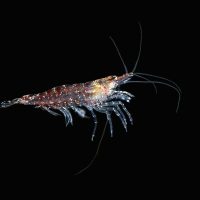
Antarctic krill (let’s call them krill from now on) are small crustaceans about 2 inches (5 centimeters) long.
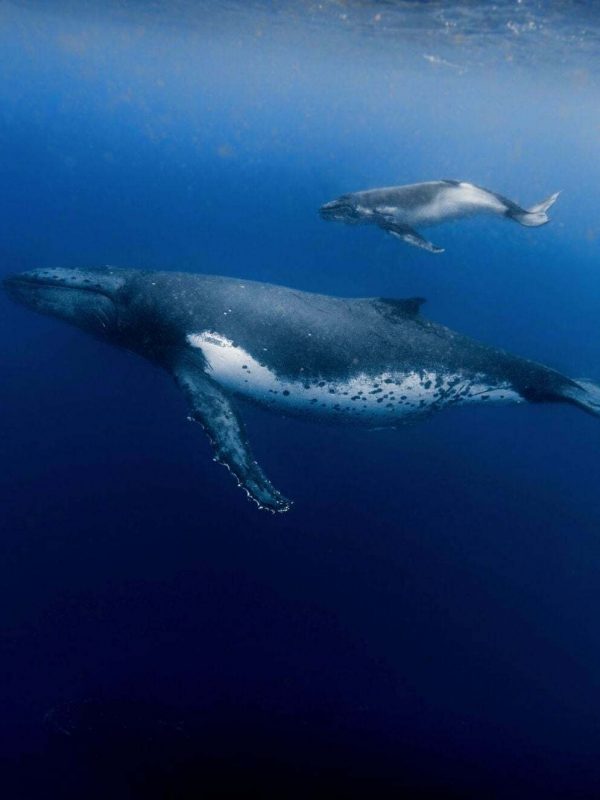
Generally drifting in vast swarms, they are a vital source of nutrition for Antarctic seals, whales, fish, penguins, and other seabirds.
Without krill, Antarctic ecosystems would fall apart.
“Antarctic krill may be small, but they play a vital role in supporting the Southern Ocean ecosystem.
Nicole Bransome, The Pew Charitable Trusts
No krill = no food for marine birds and mammals in Antarctica. No krill = loss of a major source of carbon sequestering.”

Krill as carbon superstars
CONSERVING ANTARCTIC KRILL
In addition to the vital role they play in the Antarctic food web, krill is a significant carbon sink, helping to keep the planet cool.
While each krill is small, together the global population weighs more than any other animal species on earth apart from humans. Much of this weight is in the form of carbon.
Throughout the krill lifecycle this carbon is incorporated into their shells, skeletons, and poop, before ending up on the seafloor when they die. This keeps a lot of carbon out of the atmosphere, where it would mostly take the form of carbon dioxide, a greenhouse gas that causes climate warming.
This natural carbon storage is an ecosystem service that has been estimated at a value of USD 4-46 billion.

What’s happening?
CONSERVING ANTARCTIC KRILL
Although Antarctic krill are abundant, they are not spread evenly across the Southern Ocean. In fact almost a third of their population is found in a relatively small area around the northern Antarctic Peninsula and Scotia Sea.
Each summer huge groups of whales migrate here to feast on dense krill swarms, which also feed some of the largest seal and penguin colonies on earth. However, this thriving polar paradise is under threat.

A warmer Antarctic
CONSERVING ANTARCTIC KRILL
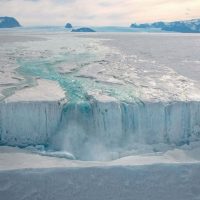
The northern Antarctic Peninsula and Scotia Sea regions are experiencing rapid changes caused by the climate emergency.
Increased temperatures across the region have given rise to a cascade of severe changes including:
- Dramatic reductions in winter sea ice
- Ocean acidification
- Glacial melt, and
- Changes in the type, size and nutritional value of plankton.
These changes could be catastrophic for krill.

CONSERVING ANTARCTIC KRILL
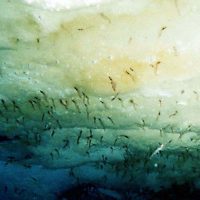
Faced with habitat loss and a growing commercial krill fishery, krill face an uncertain future.
Photo credit: Langdon Quentin and Robin Ross, Marine Science Institute, University of California, Santa Barbara, and National Science Foundation.
Krillin’ it
CONSERVING ANTARCTIC KRILL
There are already indications that krill are being affected.
Warmer oceans and reduced seasonal sea ice are driving high density Antarctic krill swarms towards the south.
Rapidly melting glaciers are releasing sediment into coastal ecosystems, which is thought to be the primary cause of several krill mass mortality events. As filter feeders, krill ingest these suspended particles along with their regular diet of phytoplankton. The sediment can block their digestive systems, and hundreds of thousands of krill have been found washed ashore on Antarctic beaches, with juveniles particularly vulnerable.
As the ocean continues to absorb excess carbon dioxide it is becoming more acidic, which will affect krill embryos and their food sources.
Krill predators are also feeling the heat.
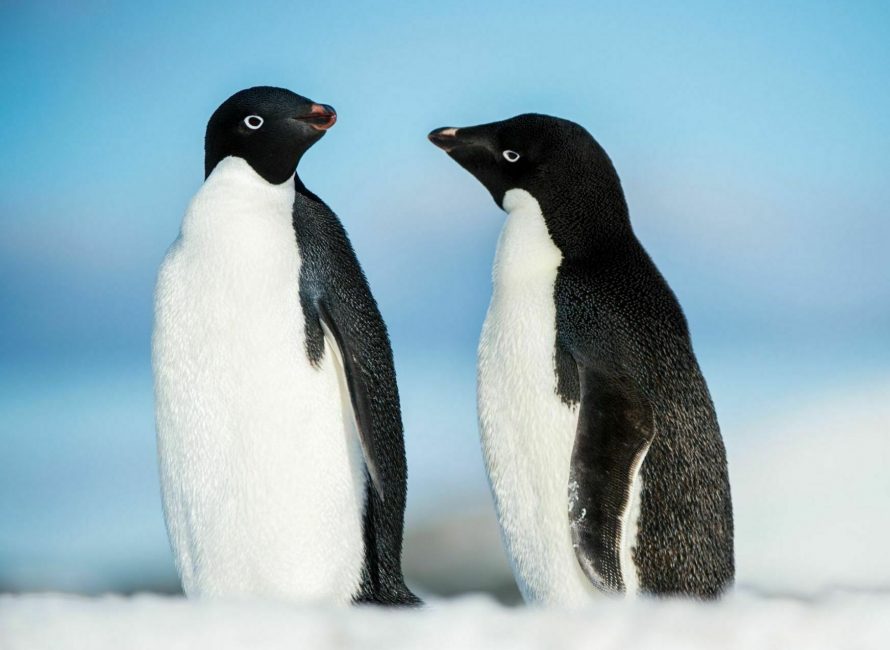
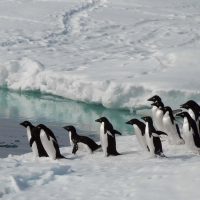
Dramatic declines in some penguin populations have been linked to reduced availability of krill.

CONSERVING ANTARCTIC KRILL
You can help
With the generous support of our global community, ASOC continues to provide decision makers with the best available science, and advocate for precautionary, ecosystem-based protection for the Antarctic.
CONSERVING ANTARCTIC KRILL
Spotlight on: Krill fisheries
Failure to renew important conservation measures has left Antarctic krill vulnerable to overfishing. In 2025, for the first time in history, the industry hit the annual catch limit of 620,000 metric tonnes, triggering an unprecedented shutdown. Read more below.
The Antarctic krill fishery
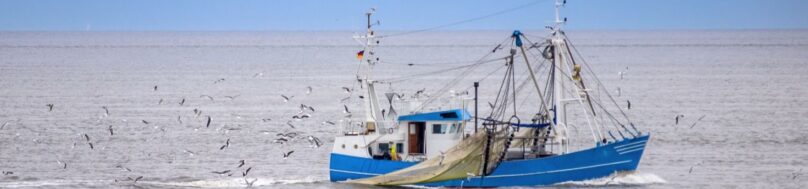
Industrial fisheries have been harvesting Antarctic krill (Euphausia superba) in the Southern Ocean since the 1960s.

Who manages the krill fishery?
The Antarctic krill fishery is managed by the Commission for the Conservation of Antarctic Marine Living Resources (CCAMLR).

The problem
The Southern Ocean is divided into several sectors, known as ‘Areas’, for the purposes of krill fisheries management. Almost all Antarctic krill fishing activity takes place in Area 48 (see map below), a region known for its important foraging areas, exposure to growing tourism, and rapid climate change.
Area 48 includes the coastal waters of the Antarctic Peninsula, South Shetland Islands, South Orkney and South Sandwich Islands, and South Georgia. This region is known as one of the most biologically active areas of the Southern Ocean, and its importance as a foraging ground for krill predators such as penguins, seals, and whales.
Area 48 also includes the Scotia Arc, Weddell Sea, parts of the southwest Atlantic Ocean and the Queen Maud Land coast. It extends north from the Antarctic coastline to a latitude of 50° South in some places.
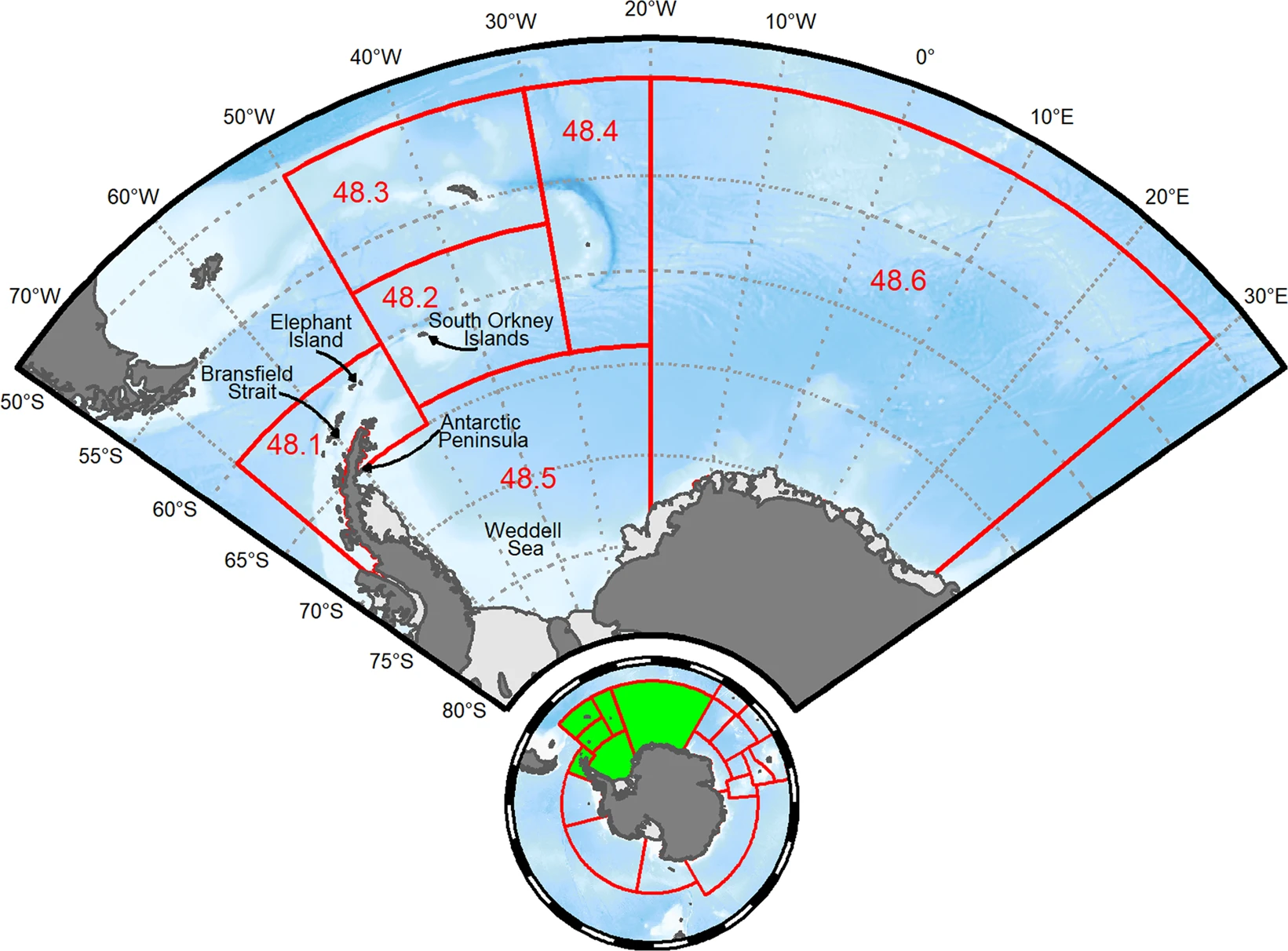
Convention area 48 (green area) of the Commission for the Conservation of Antarctic Marine Living Resources (CCAMLR) and its Subareas. Source.
Managing the krill fishery
Historically, the fishery in Area 48 was managed by two CCAMLR conservation measures (CMs), CM 51-07 and CM 51-01.
Distributing pressure from fisheries
Conservation measure 51-07 divides Area 48 into four sub-areas, each with their own catch limit or total allowable catch: the maximum amount of krill that can be harvested each season. Allocating individual catch limits to each sub-area allows for a more nuanced, region-specific approach, taking into account factors like krill biomass and known predator foraging grounds. Distributing pressure from fisheries can also help reduce the impact on penguins, whales and other foraging predators that feed on krill in certain areas.
In October 2024 CCAMLR failed to renew this conservation measure. This meant that krill fishing vessels were no longer required to spread their activities out across the sub-areas, but could take krill from anywhere at any time, focusing their activities wherever the most dense krill swarms were found, possibly in direct competition with krill predators.
In the summer of 2024-25, a number of krill fishing vessels converged on the former Area 48.1, where roughly 30% of the global population of Antarctic krill is concentrated. Many focused their activity in nearshore areas of the Bransfield Strait and Gerlache Strait on the Antarctic Peninsula, areas popular with tourism vessels. Fisheries vessels were seen harvesting krill within view of feeding whales and penguin colonies. In March 2025 the director of the Fisheries and Aquaculture Service in Chile filed a criminal complaint against a fisheries vessel for the death of a humpback whale in the net of a krill super trawler.
Between November 2024 and August 2025 the industry harvested 620,000 metric tonnes of krill, the total allowable catch for all of Area 48. The industry has reached catch limits in the past – for example the catch limit for Area 48.1 (155,000 metric tonnes, or 25% of the Area 48 catch limit) was reached 11 out of 13 times between 2010 and 2023, forcing the fishery to close before the end of the season (ASOC 2023) – but this was the first time in history the catch limit for all of Area 48 had been reached, and it triggered an unprecedented industry shutdown.
While it is not yet clear exactly where the majority of this krill was harvested, it is quite possible that fisheries activity was concentrated in the most important and vulnerable foraging areas of the southwest Atlantic, which may have unintended consequences for krill predators and the marine ecosystem more broadly.
Catch limits need updating
Conservation measure 51-01 sets the catch limit or total allowable catch for each Area. Catch limits are established based on the best available science, and regular monitoring is required to ensure that the ecosystem is not being negatively impacted by the Antarctic krill fishery.
While this measure is still in place, many researchers warn that catch limits for Antarctic fisheries, including those in Area 48, need to be updated to take into account recent changes such as:
- The southerly migration of high density krill populations.
- The unknown impacts of warmer oceans, ocean acidification, and reduced seasonal sea ice on krill.
- Increased demand for krill from predators, in particular whale populations recovering from decades of commercial exploitation.
- The effects of a growing krill fishery.
Gathering data to adequately inform a review of catch limits is challenging and expensive due to the scale and remoteness of the Southern Ocean. However, it is critical that the scientific community and CCAMLR make every possible effort to determine a precautionary catch limit that will ensure the conservation of krill, their predators, and Antarctic marine ecosystems as they face the combined threats of climate heating and increasing human activity.
CCAMLR officially acknowledges the complex challenges facing Antarctic krill populations, and many Parties are making efforts to address known threats. However tension between Parties involved in commercial fisheries and those with a focus on conservation concerns have proved insurmountable in recent years, with fisheries nations blocking much-needed protections. ASOC continues to urge CCAMLR to:
- Complete their scientific work program.
- Develop a finer-grained, small-scale management regime that takes into consideration localized relationships between krill, fisheries, krill predators, and the environment.
- Introduce comprehensive scientific monitoring.
- Address the problem of bycatch.
- Meet their commitment to establish a network of Marine Protected Areas (MPAs).

The solution
To protect against threats facing this sensitive region, ASOC encourages CCAMLR to introduce an updated krill fishery ecosystem-based management system, implement effective scientific monitoring and compliance mechanisms, and adopt the Antarctic Peninsula/Domain 1 marine protected area (MPA).
CONSERVING ANTARCTIC KRILL
Learn more about krill
Find out more about these cool crustaceans from our global network of partners in krill conservation.


Support the campaign
CONSERVING ANTARCTIC KRILL
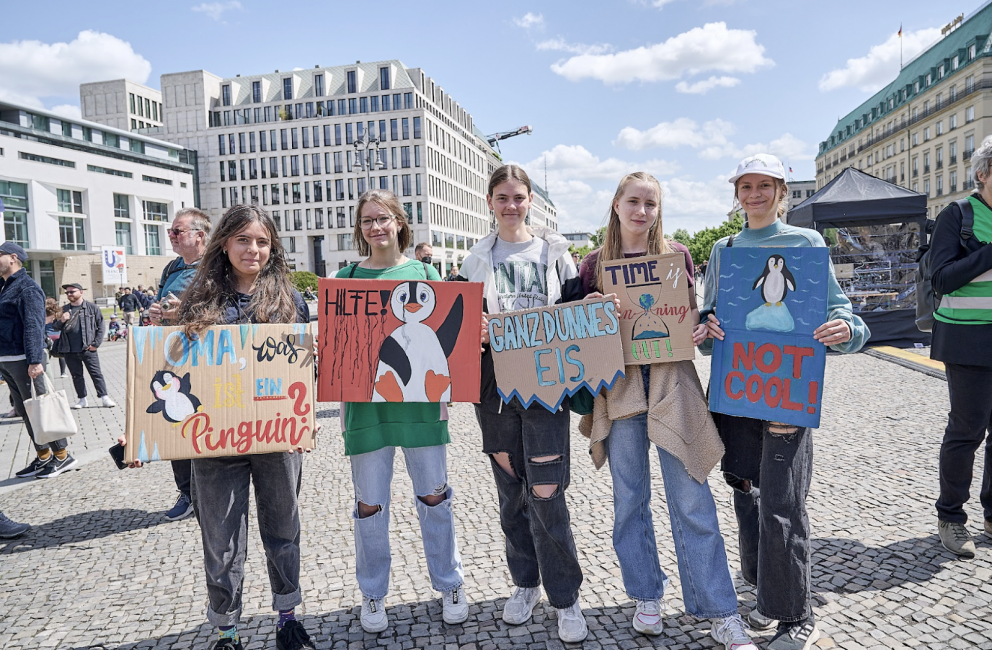
Your gift makes a difference! Thanks to the generous support of our global network, ASOC continues to advocate for stronger environmental protection for Antarctica and its ecosystems.
CONSERVING ANTARCTIC KRILL
How we work
As the only environmental NGO invited to observe Antarctic Treaty meetings, we represent the Antarctic conservation community at the highest levels of Antarctic governance. We work within the system to conserve Antarctic krill in the following ways:
Within CCAMLR
CCAMLR is an international body tasked with the conservation of Southern Ocean marine life and ecosystems, and the regulation of its industries, including the krill fishery.
Discover More
Within CCAMLR
CCAMLR is an international body tasked with the conservation of Southern Ocean marine life and ecosystems, and the regulation of its industries, including the krill fishery.
In 2024 krill fishery regulations went backwards, with Members failing to renew an important Conservation Measure to spread the krill catch across vulnerable areas.
As the only official environmental NGO observer at CCAMLR meetings, ASOC presents science-based policy proposals and provides Members with reliable information on how to protect Antarctic wildlife and the environment.
Our current priorities for the management of the Antarctic krill fishery are:
Complete the scientific work program
CCAMLR must continue and complete their scientific work program to inform robust, precautionary, ecosystem-based management for the krill fishery across the entire Antarctic Peninsula and Scotia Sea region, including:
- Producing a revised krill biomass estimate and stock assessment model, and
- Conducting a spatial overlap analysis to space out catch and reduce the impact on predators, such as penguins, seals, and whales.
Develop new regulations
Develop a finer-grained, small-scale management regime that takes into consideration localized relationships between krill, fisheries, krill predators, and the environment.
Ensure the new management system is backed by comprehensive scientific monitoring to detect and prevent impacts of fishing on the ecosystem, and an enhanced compliance regime.
Address the problem of bycatch
In 2021 and 2022 there were four reported incidents of whales caught by the krill fishery.
In March 2025 the director of the Fisheries and Aquaculture Service in Chile filed a criminal complaint against a fisheries vessel for the death of a humpback whale in the net of a krill supertrawler.
Meet their commitment to establish a network of Marine Protected Areas (MPAs)
ASOC continues to advocate strongly for a representative network of MPAs in the Southern Ocean, starting with existing proposals in East Antarctica, the Weddell Sea, and the Antarctic Peninsula.
Read more about Antarctic Marine Protected Areas.
Read ASOC submissions to CCAMLR.
Learn more about CCAMLR.

Marine Protected Areas
ASOC strongly supports the establishment of a representative network of Marine Protected Areas (MPAs) across the Southern Ocean.
Discover More
Marine Protected Areas
ASOC strongly supports the establishment of a representative network of Marine Protected Areas (MPAs) across the Southern Ocean.
Large scale protection is vital for Antarctic ecosystems threatened by rapid climate change, and human activities expanding in scale and duration.
In 2009 CCAMLR committed to creating a representative network* of marine protected areas around Antarctica. Despite the efforts of many Members, CCAMLR’s own deadline has long since passed. Since 2016, CCAMLR Members have been unable to reach consensus on any new marine protected areas.
ASOC continues to advocate strongly for a representative network of MPAs in the Southern Ocean, starting with existing proposals in East Antarctica, the Weddell Sea, and the Antarctic Peninsula.
In regions where krill fishing takes place, small-scale catch limits should be set and a scientifically grounded feedback management regime established to minimize the impacts of fisheries on local predators such as penguins, seals and whales.
*‘Representative network’ means that significant portions of all habitats, ecosystems, and species are included, representing an entire, functional ecosystem.

Within the Antarctic Treaty System
Each year, representatives from over 50 nations gather at the Antarctic Treaty Consultative Meeting (ATCM) to make decisions about the future of Antarctica. ASOC attends this forum as an invited expert, representing our members and the broader global conservation community.
Discover More
Within the Antarctic Treaty System
Each year, representatives from over 50 nations gather at the Antarctic Treaty Consultative Meeting (ATCM) to make decisions about the future of Antarctica. ASOC attends this forum as an invited expert, representing our members and the broader global conservation community.
At the ATCM ASOC urges decision-makers to conserve vulnerable krill populations by:
- Supporting efforts to reach consensus on a network of proposed marine protected areas within CCAMLR;
- Reducing marine pollution;
- Improving wastewater treatment practices;
- Taking meaningful action to protect polar marine ecosystems from the impacts of climate change, and
- Expanding existing networks of Antarctic Specially Protected Areas (ASPAs) and Antarctic Specially Managed Areas (ASMAs).
ASOC will continue to present Antarctic Treaty decision makers with the best available science to support robust protection for Antarctic ecosystems.
Read our recent ATCM Information Papers related to protecting krill ecosystems:
- Harmonised implementation of the Polar Code and related shipping issues (2024)
- Spatial protection supports scientific research (2024)
- Gray water (2024)
- ASOC update on marine protected areas in the Southern Ocean 2019-2023
Learn about the Antarctic Treaty System.
CONSERVING ANTARCTIC KRILL
Related reading


What you can do
ANTARCTIC KRILL FISHERIES
Last updated September, 2025.

References:
ASOC (2022). Finer-scale krill fishery management, enhanced monitoring and additional measures to protect the krill-based ecosystem.
Atkinson et al. (2009). A re-appraisal of the total biomass and annual production of Antarctic krill.
Atkinson et al. (2019). Krill (Euphausia superba) distribution contracts southward during rapid regional warming
Atkinson et al. (2021). Stepping stones towards Antarctica: Switch to southern spawning grounds explains an abrupt range shift in krill.
Aves et al. (2022). First evidence of microplastics in Antarctic snow.
Bar-On, Y. M et al. (2018) The biomass distribution on Earth.
Cavan et al. (2024). Antarctic krill sequester similar amounts of carbon to key coastal blue carbon habitats.
Chown et al. (2022). Antarctic Climate Change and the Environment: A Decadal Synopsis and Recommendations for Action.
Costa et al. (2021). Large diatom bloom off the Antarctic Peninsula during cool conditions associated with the 2015/2016 El Niño.
Cruz et al. (2022). Spatial and temporal catch concentrations for Antarctic krill: Implications for fishing performance and precautionary management in the Southern Ocean.
Ferreira et al. (2020). Changes in Phytoplankton Communities Along the Northern Antarctic Peninsula: Causes, Impacts and Research Priorities.
Fuentes, V. et al (2016). Glacial melting: An overlooked threat to Antarctic krill.
Gallagher et al. (2023). Quantifying Antarctic krill connectivity across the West Antarctic Peninsula and its role in large-scale Pygoscelis penguin population dynamics.
Kawaguchi So et al. (2012). Will krill fare well under Southern Ocean acidification?
Kawaguchi et al. (2013). Risk maps for Antarctic krill under projected Southern Ocean acidification.
Lynch et al. (2012). Spatially integrated assessment reveals widespread changes in penguin populations on the Antarctic Peninsula.
Melbourne-Thomas et al. (2016). Under-ice habitats for Antarctic krill larvae: could less mean more under climate warming?: Under-ice habitats for larval krill.
Meyer et al. (2020). Successful ecosystem-based management of Antarctic krill should address uncertainties in krill recruitment, behaviour and ecological adaptation.
Rowlands et al. (2021). The Effects of Combined Ocean Acidification and Nanoplastic Exposures on the Embryonic Development of Antarctic Krill.
Strycker et al. (2020). A global population assessment of the Chinstrap penguin (Pygoscelis antarctica).
Swadling et al. (2023). Biological responses to change in Antarctic sea ice habitats.
Trathan et al. (2025). The fishery for Antarctic krill – Conflicts between industrial production, protection of biodiversity, and legal governance.
Waller et al (2017). Microplastics in the Antarctic marine system: An emerging area of research.
Scientific consultation: Nicole Bransome, Senior Officer, Ross Sea at Blue Nature Alliance.