 ASOC
ASOC


What is the Polar Code?
polar code
The International Code for Ships Operating in Polar Water (Polar Code) is the first mandatory, international maritime agreement developed for the polar region. It aims to ensure safe shipping and avoid environmental damage in the remote and sensitive polar regions.
Adopted by the members of the International Maritime Organization (IMO) under the auspices of the United Nations, the Polar Code entered into force in January 2017.
The Polar Code introduced legally-binding safety and pollution-prevention measures for cruise ships and large cargo ships (over 500 gross tons) in polar waters.


Creating the Polar Code
polar code
The Polar Code was the result of six years of advocacy at meetings of the Antarctic Treaty Parties and the International Maritime Organization (IMO).
ASOC was directly involved in this process, both independently and as a member of the Friends of the Earth International (FOEI) delegation to the IMO, and lobbied hard for the strongest possible provisions to protect the Southern Ocean.
While ASOC welcomed the mandatory measures introduced in the Polar Code, there is still work to be done. Learn about the ASOC campaign for a stronger Polar Code.
POLAR CODE
The need for a Polar Code
The Polar Code was developed in response to a growing awareness of the unique risks involved with shipping in the polar regions.
It introduced polar-specific regulations to reduce the risk of critical incidents and provide additional protection for polar oceans, ecosystems, and the people who live and work there.

Southern Ocean shipping
polar code
Each year, vessels carrying as few as 6 and as many as 1918 passengers travel across the Southern Ocean for a range of purposes. These include voyages to support National Antarctic Programs, fisheries, tourism, independent travel, and other non-governmental activities.
A combination of remoteness, cold temperatures, frequent storms and drifting ice makes the Southern Ocean one of the most challenging, dangerous regions in the world for ships. Search and rescue is difficult, and accidents and incidents can quickly escalate, resulting in loss of property or life, and irreversible damage to polar ecosystems.

Accidents and Incidents
polar code
Between 2006 and 2019 ASOC identified over 25 shipping incidents in the Southern Ocean which required some level of emergency response. Incidents ranged from groundings and collisions with ice to besetment (entrapment) in ice, mechanical failures and onboard fires.
Accidents have resulted in costly rescues of passengers and crews, oil spills with the potential for damage to the environment, or loss of lives or the vessel concerned. Most of them involve international search and rescue.
Download infographic on major incidents in the Southern Ocean between 2008 and 2015.

POLAR CODE
Accidents and Incidents
It is difficult, sometimes impossible to quickly assist a vessel in distress. Even under the most favorable conditions it can take a number of days for rescuers to reach a stricken vessel in the Southern Ocean.
As shipping traffic increases in polar waters, the risk of incidents rises as well – and these may not occur under circumstances as favorable as those below.

MV Explorer (2007)
In November 2007 the Liberian-flagged MV Explorer, a passenger ship carrying 100 passengers and 54 crew, struck ice while transiting an ice field off the west Antarctic Peninsula. The ship began taking on water.
Fortunately the weather was calm and the Master made an early decision to evacuate the ship. The passengers and crew were transferred to life boats and then to another vessel, the Nordnorge, which was close by.
Within two hours of the passengers being safely transferred the weather conditions deteriorated to gale force winds, illustrating just how quickly Antarctic weather can change from benign to threatening.
The MV Explorer sank with almost 50,000 gallons (185,000 liters) of diesel, 6300 gallons (24,000 liters) of lubricant and 265 gallons (1,000 liters) of gasoline on board, leaving behind a slick of diesel oil almost a mile (1.5 kilometers) long.
Weather conditions made it impossible to contain the oil spill or conduct environmental remediation in the aftermath of the incident.
Read the report into the official investigation into the sinking of the MV Explorer here.
Read more about incidents in the Southern Ocean:
ASOC Information Paper: Vessel Management in the Antarctic Treaty Area.
ASOC Information Paper: Follow up to Vessel Incidents in Antarctic Waters.
Akademik Shokalskiy (2013)
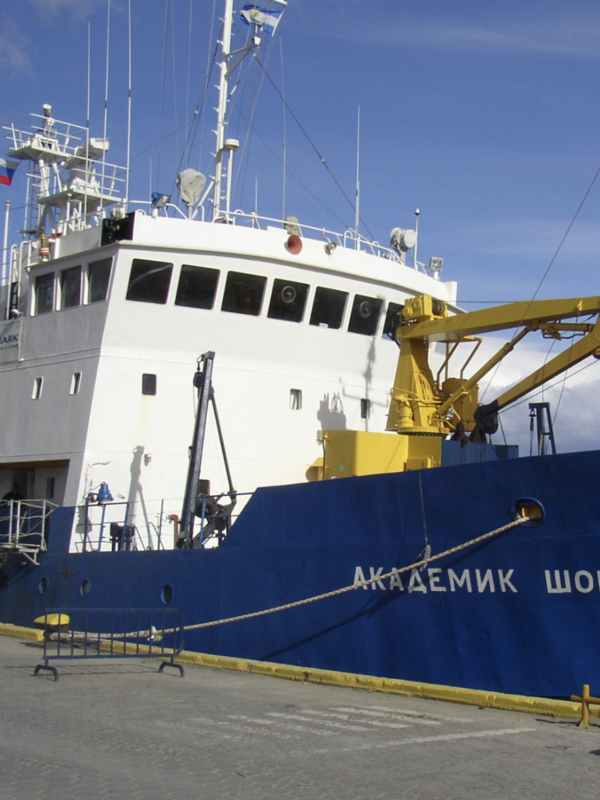
In December 2013 the Akademik Shokalskiy, a Russian-flagged cruise and research ship, was undertaking a re-enactment of the 1911-14 Australasian Antarctic Expedition when it became stuck in heavy sea ice for almost two weeks.
Icebreakers from the Australian, Chinese and French National Antarctic Programs were sent to its aid, but were unable to reach the ship with its 52 passengers (both tourists and researchers) and 22 crew. In fact, one of the rescue icebreakers became trapped in the dense ice itself.
Occupants of the Akademik Shokalskiy were well-provisioned and not in immediate danger. Unable to reach the stricken ship, rescuers eventually deployed a helicopter, airlifting the researchers and passengers to safety. They were transferred to an ice floe in groups of 12, then ferried to an icebreaker in a small boat. All 52 passengers were rescued, with the 22 crew remaining on board until the ship was freed from the ice, two weeks after it was beset.
The rescue mission put hundreds of people at risk, compromised the scientific programs of several Antarctic nations, and is estimated to have cost millions of dollars.
Read more about incidents in the Southern Ocean:
ASOC Information Paper on Vessel Management in the Antarctic Treaty Area.
ASOC Information Paper: Follow up to Vessel Incidents in Antarctic Waters.
Image credit: Wikimedia Commons

Antarctic Chieftain (2015)
In 2015 the Antarctic Chieftain, an Australian-flagged fishing vessel, sustained damage to three of its four propellers and became trapped in multi-year ice in the Ross Sea with 27 people aboard. The vessel was trapped for five days before the crew was rescued by the US Coast Guard icebreaker CGC Polar Star, which towed them out of the heavy ice and into open water.
The hull was undamaged, and the Antarctic Chieftain was able to sail back to port in New Zealand under its own power. It was accompanied by an escort vessel in case of further difficulties.
Read more about incidents in the Southern Ocean: ASOC Information Paper on Vessel Management in the Antarctic Treaty Area.
ASOC Information Paper: Follow up to Vessel Incidents in Antarctic Waters.
Image Courtesy of U.S. Coast Guard/ Petty Officer 1st Class George Degener.
POLAR CODE
How the Polar Code works
Under the Polar Code, ships operating in polar waters are required to observe polar-specific measures for safe shipping and environmental protection.

Pollution prevention measures
While the International Convention for the Prevention of Pollution from Ships (MARPOL) is the main international convention for preventing pollution from ships, the Polar Code introduced new requirements to provide additional protection for polar environments.
Ship safety measures
While the International Convention for the Safety of Life at Sea (SOLAS) sets minimum safety standards for international shipping, the Polar Code introduced new safety and security requirements specific to the polar regions.
POLAR CODE
Pollution Prevention Measures

Oil
Discharges
Discharge of oil or oily mixtures from any ship into the sea is prohibited.
Heavy fuel oil
Since 2011, heavy fuel oil use and carriage has been banned in the Antarctic under MARPOL Annex I. Ships are also encouraged not to use or carry heavy fuel oil in the Arctic, and a prohibition will be in place from July 2024.
Lubricants
It is also recommended that vessels consider using non-toxic biodegradable lubricants or water-based systems in lubricated components outside the underwater hull with direct seawater interfaces.
Download IMO infographic: How the Polar Code Protects the Environment

Sewage
Discharges I
No discharge of sewage is allowed in polar waters, except under specific and strict conditions. For example if the sewage is comminuted (reduced to very small particles) and disinfected it can be discharged 3 nautical miles (NM) or further from any ice shelf or fast ice.
Discharges II
Untreated sewage (neither comminuted, macerated or disinfected) can be discharged at a distance of more than 12NM from any ice shelf or fast ice.
Treatment plants
Discharge is permitted if the ship has an approved sewage treatment plant, and discharges treated sewage as far as practicable from the nearest land, any fast ice, ice shelf, or areas covered by a concentration of 10% or more of ice.
Download IMO infographic: How the Polar Code Protects the Environment

Garbage
Plastics
All disposal of plastics is prohibited (under MARPOL).
Download plastic pollution infographic.
Download ghost gear infographics.
Download Microplastics from Marine Paints infographic.
Animal carcasses
Discharge of animal carcasses is prohibited.
Food wastes I
Discharge of food wastes onto the ice is prohibited.
Food wastes II
Food wastes which have been comminuted or ground (no greater than 25mm) can be discharged only when ship is not less than 12NM from the nearest land, ice shelf, or fast ice, or as far as practicable from areas covered by 10% or more ice concentration.
Cargo residues
There are virtually no cargo ships in Antarctica, and no ports in the Antarctic Special area. However, the following provisions apply:
- Discharge of cargo residues is effectively prohibited.
- Cleaning agents or additives in hold washing water may only be discharged if they are not harmful to the marine
- Environment and as far as practicable from areas covered by 10% or more of ice and not less than 12 nautical miles (NM) from nearest fast ice.
Download IMO infographic: How the Polar Code Protects the Environment

Invasive species
Invasive aquatic species
Measures are to be taken to minimize the risk of invasive aquatic species through ships’ ballast water and biofouling.
Download IMO infographic: How the Polar Code Protects the Environment

Chemicals
Discharges
Discharge of noxious liquid substances (NLS) or mixtures containing NLS is prohibited in polar waters.
Download IMO infographic: How the Polar Code Protects the Environment
While the conservation community welcomes these pollution prevention measures, there are important gaps that need to be addressed.
These include gray water disposal, microplastics pollution, black carbon, and underwater noise.
POLAR CODE
Ship Safety Measures

Operations & manning
Navigation
When considering a route through polar waters, Masters must consider the following:
- The extent and type of sea ice and icebergs
- Information about ice and ocean temperatures from previous years.
- Densities of marine mammals, including seasonal migration areas.
- Measures to be taken when marine mammals are encountered.
- Any designated protected areas.
- Any other operational and safety procedures.
Certificate & Manual
All ships are required to have a Polar Ship Certificate and the ship’s Polar Water Operational Manual on board.
Training
Masters, chief mates and officers in charge of a navigational watch must have completed appropriate basic training (for open-water operations), and advanced training for other waters, including ice.

Design & construction
Ship categories
There are three categories of ship which may operate in Polar Waters.
Category A: A ship designed for operation in polar waters in at least medium first year ice, which may include old ice inclusions. Category A vessels are suitable for year-round operation in all polar waters.
Category B: A ship not included in Category A, designed for operation in polar waters in at least thin first-year ice, which may include old ice inclusions. Category B vessels are suitable for summer-autumn operation in thin to medium sea ice which may include old ice inclusions.
Category C: A ship designed to operate in open water or in ice conditions less severe than those included in Categories A and B. This corresponds to ships of any Baltic ice class or with no ice strengthening at all. Category C vessels are suitable for light ice conditions, first year ice up to 1.0m and ice-free open water conditions.
Intact stability
Sufficient stability in intact condition when subject to ice accretion and the stability calculations must take into account the icing allowance.
Materials
Ships intended to operate in low air temperature must be constructed with materials suitable for operation at the ships polar service temperature.
Structure
In ice strengthened ships, the structure of the ship must be able to resist both global and local structural loads.
Image courtesy of IMO

Equipment
Windows on Bridge
Bridge windows must have means to clear melted ice, freezing rain, snow, mist, spray and condensation.
Lifeboats
All lifeboats must be partially or totally enclosed.
Clothing I
Vessels must carry adequate thermal protection for all persons on board.
Clothing II
On passenger ships, an immersion suit or a thermal protective aid must be carried for each person on board.
Ice removal
Ships must have special equipment for ice removal, such as electrical and pneumatic devices, and special tools such as axes or wooden clubs.
Fire safety
Vessels must carry extinguishing equipment operable in cold temperatures. They should be protected from ice, and suitable for use by persons wearing bulky and cumbersome cold weather gear.
Most of the mandatory safety measures in the Polar Code only apply to cruise ships and large cargo ships.
This leaves more than 50% of shipping traffic in the Southern Ocean at higher risk.
Keep learning about the Polar Code at the links below.ng Antarctic decision-makers today.
Polar Code
ADDITIONAL RESOURCES
