ASOC
ASOC
Artwork inauguration: June 27, 2025, 12:30-14:00, ATCM-47, MiCo, Milan
Final destination of artwork: once the ATCM has closed, the artwork will show at the Natural History Museum, Milan
On the occasion of the Antarctic Treaty Consultative Meeting-47 (ATCM), the Antarctic and Southern Ocean Coalition (ASOC), the German Environment Agency (Umweltbundesamt, UBA), Deutsche Umwelthilfe, and Italian National Antarctic Program (PNRA) teamed up with the art curator Nicola Ricciardi, three art students, Eleonora Molignani, Chiara Brambilla and Natasha Rivellini, as well as the illustrator Viktoria Spokojna to realize a youth program called “Species-rich Antarctica”. The objectives of the public-facing, educational program was to bring awareness to the iconic species of the emperor penguin and to its habitat, which is endangered by human activities, as well as to give youth a voice.
About the artwork
The artwork shows creations by children inspired by four key life phases of the emperor penguin: breeding, nursery, staying warm and fledging. The white fabric symbolizes the fragility of the ice. The emperor penguin is the only species depending on ice to breed. On a warming planet, its life urgently needs protection.
The illustrations by Viktoria Spokojna accompany the cyanotype print artwork, adding awareness to the fact that – with the growth of tourism in Antarctica – humans have an even bigger responsibility in protecting the habitat of the emperor penguin as a species.
The artwork was also accompanied by an interactive poll with delegates. By answering the question “What do you associate with the emperor penguin?”, the delegates were invited to contribute anonymously to the artwork, by scanning a QR code on their phone. Their answers were projected next to the artwork.

About the workshops
In 2025, the extended program consisted of two workshops about Antarctic biodiversity and the emperor penguin as a species:
- The first workshop was scientific and creative; it took place at the Montessori school in Bergamo, and children aged 12-17 participated. After a deep dive into Antarctic biodiversity, the children contributed to the large cyanotype artwork.
- The second workshop was a deep dive about Antarctic science and took place at Università degli Studi di Milano Statale, with children from the International School of Milan aged 8-16. In a live video call, the children engaged with scientists in Antarctica, and afterwards visited an old ice core with trapped air, stored at the university.
The artwork was unveiled at the ATCM-47 on June 27, 12:30-14:00. A workshop attendee presented what he learned and the art students gave an introduction to the creation and techniques used to create “A Blanket for Penguins”.
Four key life phases of the emperor penguin:

Key life cycle phase 1: Breeding
Did you know?
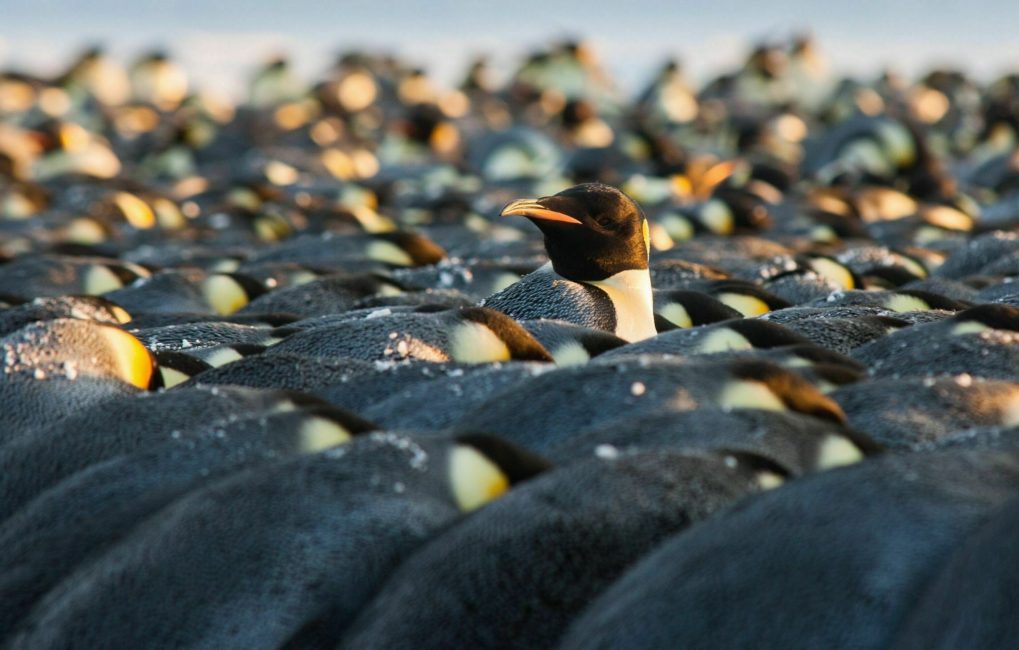
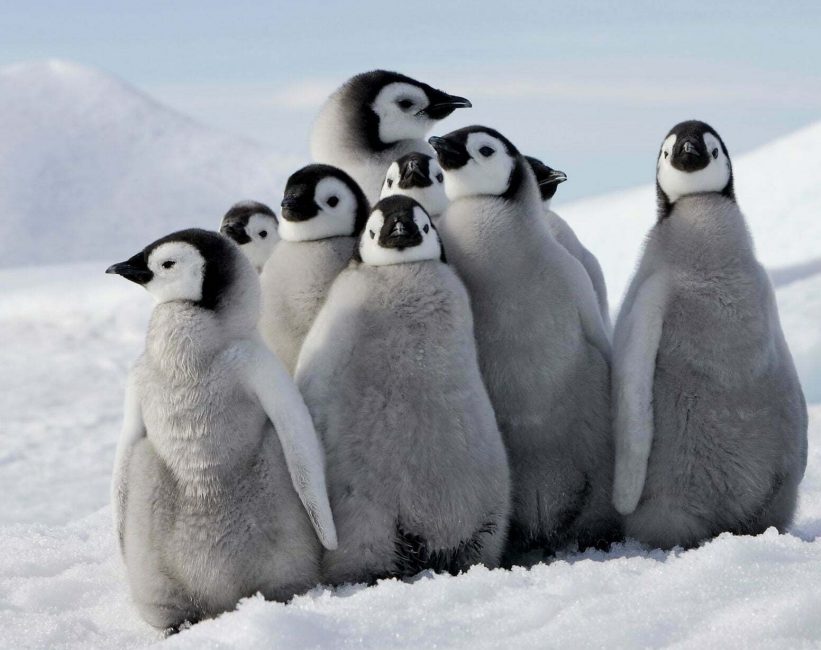
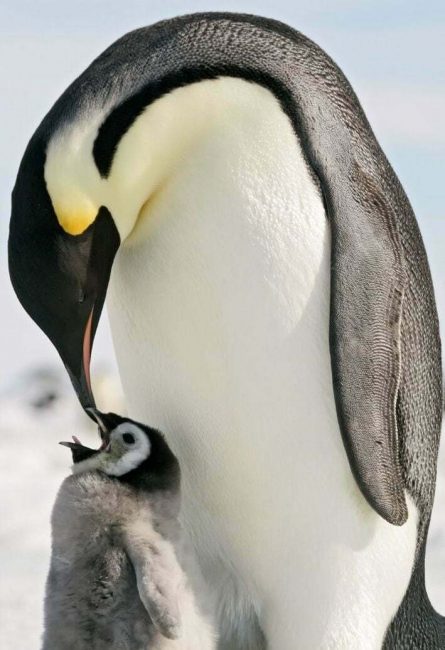
Emperor penguins are the only birds to breed during the harsh Antarctic winter. After a long march inland, females lay a single egg before returning to sea, leaving males to incubate it atop their feet under a brood pouch. Extreme cold, fierce winds, and fasting test the endurance of these dedicated fathers.

Key life cycle phase 2: Nursing
Did you know?
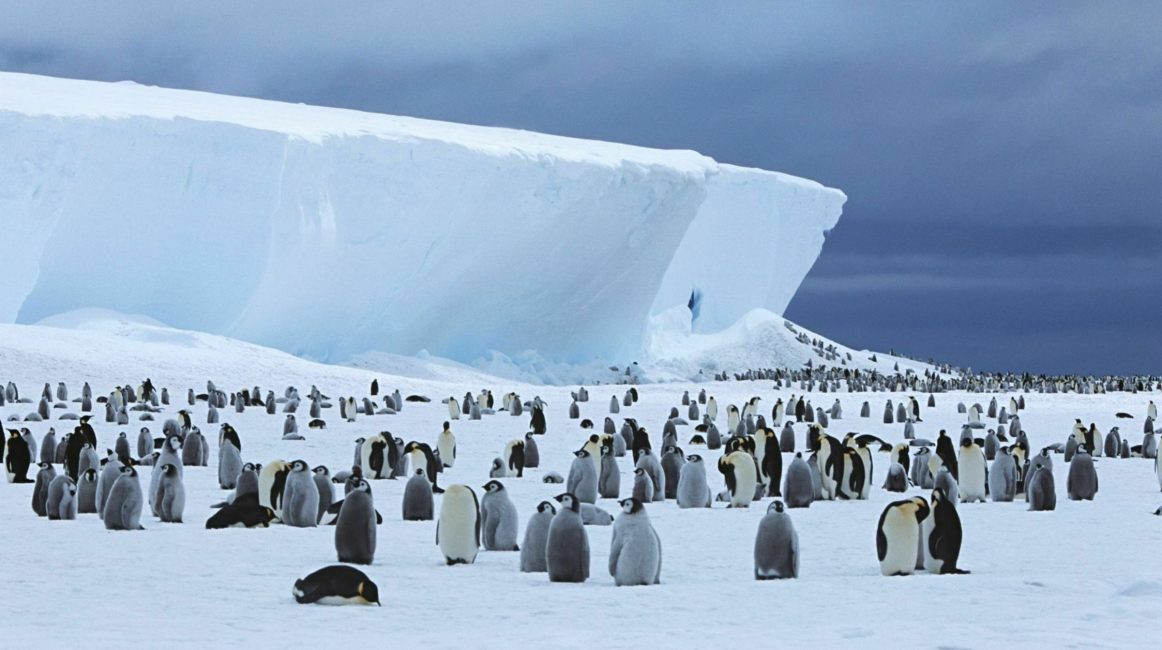
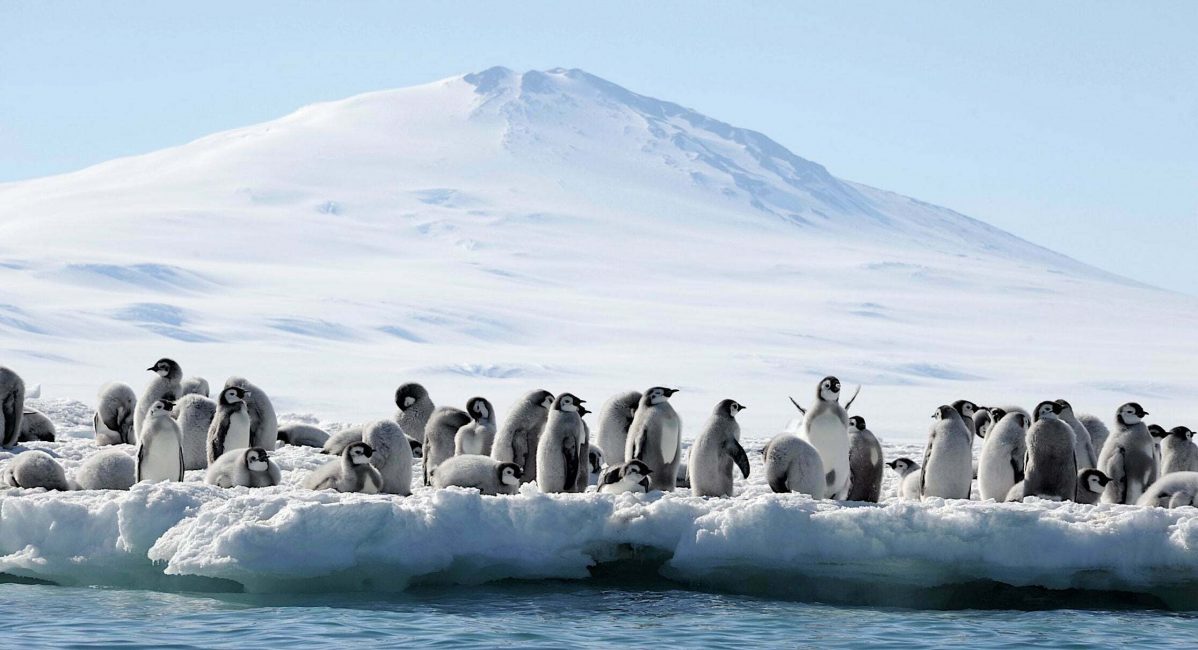
Once chicks hatch, colonies become bustling crèches where young penguins huddle together for warmth and protection. Both parents take turns feeding their chick with regurgitated food, commuting vast distances across sea ice to forage. The success of this nursery phase depends heavily on sea ice stability.

Key life cycle phase 3: Staying warm
Did you know?
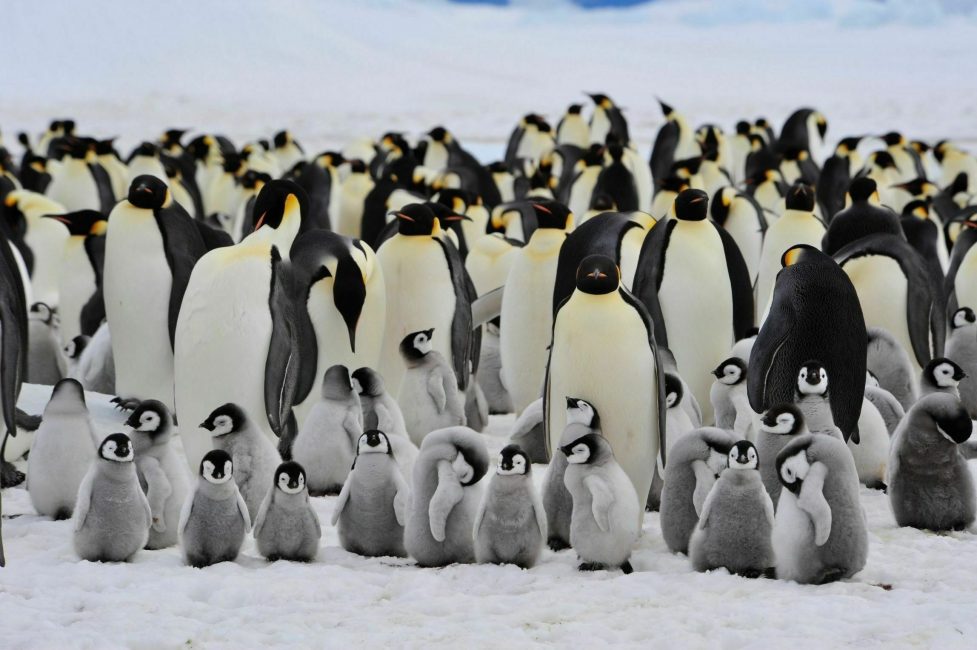
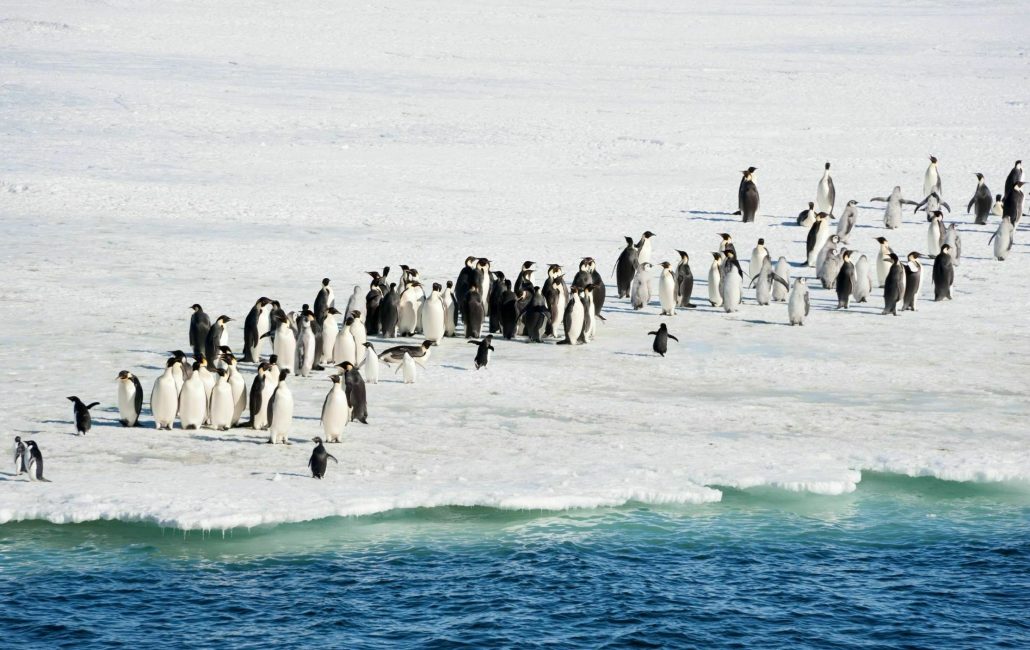
To survive temperatures as low as -60°C, emperor penguins use tightly packed huddles that rotate from center to edge, sharing warmth efficiently. Their unique social thermoregulation is essential during months of fasting and incubation. Loss of sea ice threatens their ability to gather and insulate effectively.

Key life cycle phase 4: Fledging
Did you know?
By summer, chicks grow thick juvenile feathers and prepare to fledge, leaving the colony to hunt independently at sea. This critical transition requires stable sea ice platforms for rest and learning. Earlier sea ice breakup due to warming puts fledglings at risk before they can swim and feed effectively.
How you can help:
Your voice matters. Add your name to this petition urging leaders from CCAMLR member countries to act now to protect Antarctica and the Southern Ocean.
ATCM and CCAMLR delegates,
Your actions are more important than ever. We ask you to stand up to protect the emperor penguin and put biodiversity first.
The time to #ProtectAntarctica is NOW
This project was funded by the German Federal Ministry for the Environment, Climate Action, Nature Conservation and Nuclear Safety and the German Environment Agency from the proceeds of the 16th special stamp “For environmental protection” on the subject of “Antarctica – Protecting something unique together”.
Blog article
If you are curious to pick up the atmosphere of the event, we also warmly invite you to read the blog by the program coordinator (Senior Campaigner, Meike Schützek).