 ASOC
ASOC


Fast facts
LEOPARD SEAL
Scientific name: Hydrurga leptonyx.
Average Length: Female – 9.85-11.5 feet (3 – 3.5 m); Male – 9.18 feet (2.8 m).
Average Weight: Female – 815-1,100 pounds (370-500 kilograms); Male – 705 pounds (320 kilograms).
Diet: Fish, squid, small crustaceans, penguins, small seals, whale carcasses.
Average lifespan in the wild: 12-26 years.
IUCN Red List status: Least concern (2015).
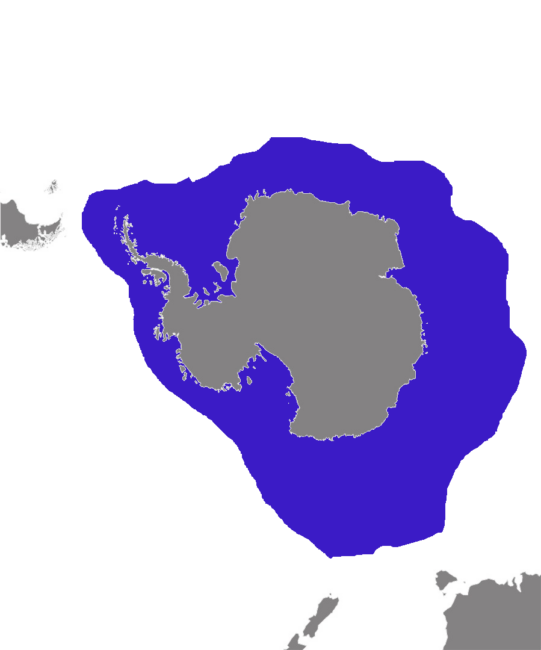
Range
LEOPARD SEAL
Leopard seals have an extensive range, and can be found across the Southern Ocean, and further afield.
Most leopard seals breed and feed amongst the Antarctic pack ice, however some may live year-round on subantarctic islands, and they are known to frequent Heard Island, Macquarie Island, and South Georgia.
Leopard seals are great travelers, and have been sighted along the coastlines of New Zealand, Australia, and as far north as the tropical Cook Islands!

Identification
LEOPARD SEAL
The leopard seal has a long, streamlined body with a large, tapered head and wide mouth.
It takes its name from its spotted coat of gray, white, and black fur, which resembles that of the leopard.
Being a true seal, the leopard seal has no external ear, and while it has relatively long fore-flippers, they are not used for movement on ice or land.

Hunting and feeding
LEOPARD SEAL
The second-largest of the Antarctic seals, leopard seals are solitary apex predators and formidable hunters.
Capable of traveling at speeds of up to 25 miles per hour (40 kilometers per hour), they are the only species of seal known to actively prey on both penguins and seal pups, including crabeater, Weddell, Ross, southern elephant and Antarctic fur seals.
While leopard seals are renowned for their hunting prowess, almost half of their diet is made up of krill and small crustaceans. This is reflected in their teeth: long, sharp canines up to 1 inch (2.5 centimeters) for hunting, and lobed molars, which allow them to filter-feed on smaller prey, much like the crabeater seal.
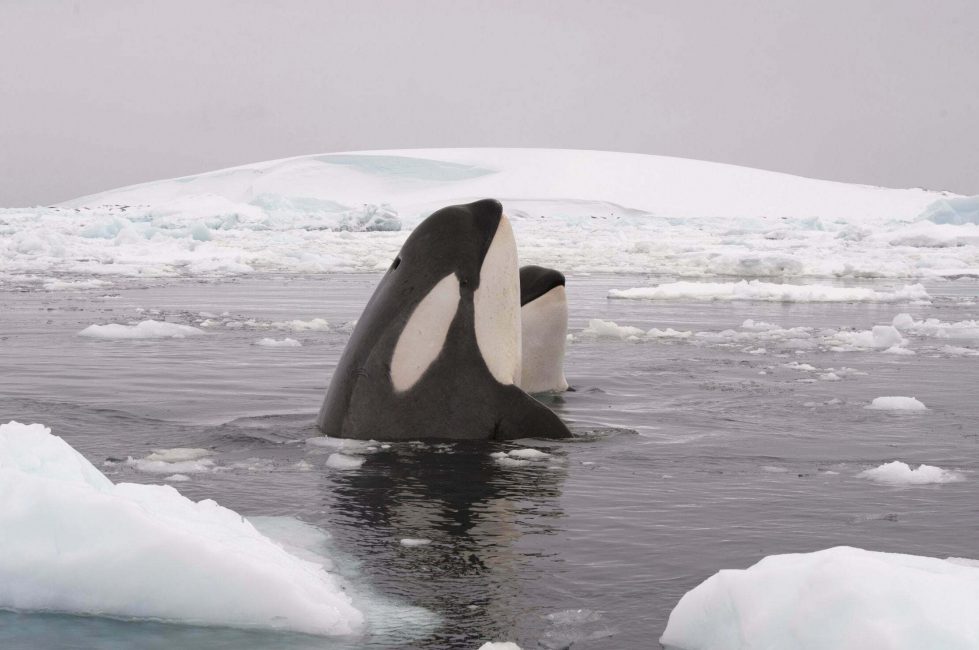
Predators
Antarctic SEALS
The only natural predator of the leopard seal is the killer whale.

Life cycle
LEOPARD SEAL
Female leopard seals reach sexual maturity between 2 and 7 years of age. In October or November, after a 9 month gestation period, females give birth to a single pup on the sea-ice or a snow-covered beach.
The pup is around 5 feet (1.6 meters) long at birth, and can weigh more than 66 pounds (30 kilograms). Mum and pup remain on the ice nursing for about a month before weaning. Once weaned, pups start hunting krill, doubling in size within just a few months.
Mating takes place after weaning, usually between December and January. No one has ever seen a leopard seal mate in its natural environment, but captive seals have been observed mating underwater.
ANTARCTIC SEALS
Related reading
Now that you’ve learned about leopard seals, read on to learn more about extraordinary Antarctica.
Antarctic Life
FEATURED LEARNING
