ASOC
ASOC


Fast facts
SOUTHERN ELEPHANT SEAL
Scientific name: Mirounga leonina.
Average Length: Female – 8.5 to 9.8 feet (2.6 to 3 meters); Male – 14 to 19 feet (4.2 to 5.8 meters).
Average Weight: Female – 880 to 1,980 pounds (400 to 900 kilograms); Male – 4,900 to 8,800 pounds (2,200 to 4,000 kilograms).
Diet: Squid, octopus, fish, marine molluscs.
Average lifespan in the wild: 21 years.
IUCN Red List status: Least concern (2014).

Range
SOUTHERN ELEPHANT SEAL
Elephant seals forage widely across much of the southern hemisphere, and breed in dense colonies on subantarctic islands.
While they are found primarily in the Southern Ocean, small, remnant, or vagrant populations can be found in Australia, South Africa, and South America, and as far north as Mauritius and Oman.
The largest concentration of southern elephant seals is found on the subantarctic island of South Georgia, where over half of the world’s population congregates.

Identification
SOUTHERN ELEPHANT SEAL
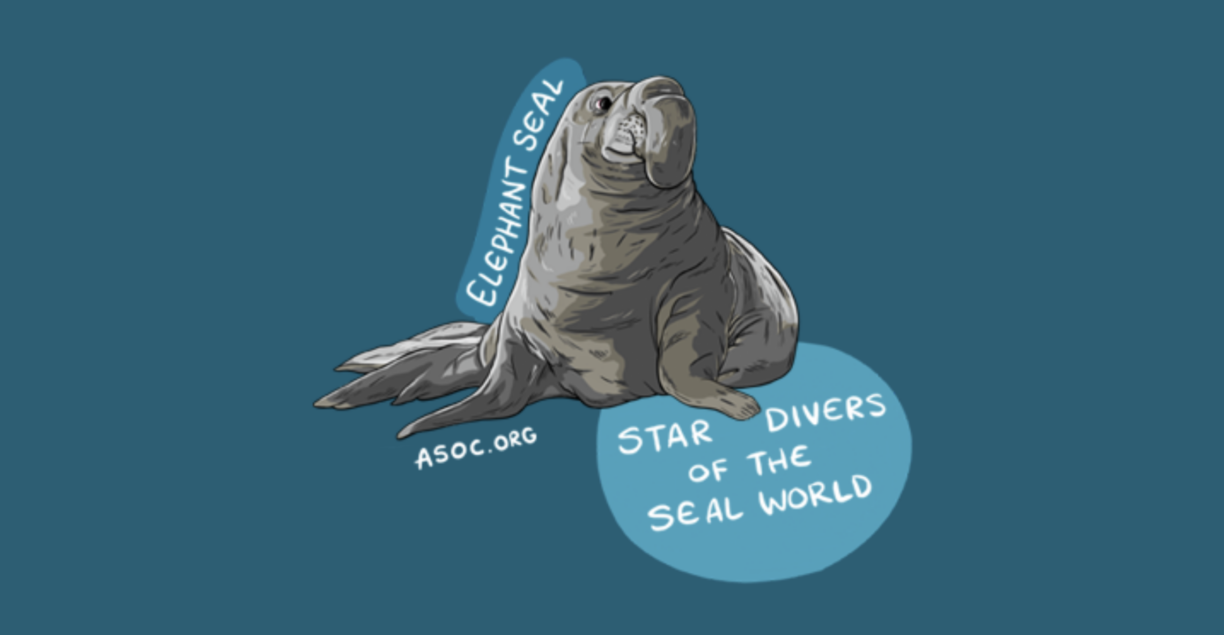
Southern elephant seals are the largest seals on the planet, and the largest mammals on Earth apart from whales.
They have a thick layer of blubber, which is covered in a yellowish or silvery-gray-brown coat. Each year they undergo a catastrophic molt, shedding their fur and a layer of underlying skin before growing a replacement over the course of a month. One of their most distinctive features is the large, trunk-like snout or proboscis (nose) of the mature male, which is used to amplify their vocalizations.
Southern elephant seals can be distinguished from other Antarctic true seals by their size, the lack of patterning on their coat, and the prominent proboscis on males.


Other unique features
SOUTHERN ELEPHANT SEAL
Sexual dimorphism
Male southern elephant seals are significantly larger than females. An average mature can be more than twice the length of a female, and up to ten times heavier.
Wallows
Southern elephant seals often bunch together in muddy pits called wallows, using their small flippers to cover themselves with wet sand, which helps keep them cool.

Feeding
SOUTHERN ELEPHANT SEAL
Southern elephant seals spend much of their lives at sea. They often range hundreds of miles from their breeding grounds, foraging for squid and fish on or near the Antarctic continental shelf.
While feeding they commonly dive to depths of 980-2600 feet (300-800 meters), remaining submerged for 30 minutes at a time.
They are the deepest diving seals on earth, and hold the record for the deepest known recorded dive of any air-breathing vertebrate, at almost 7000 feet (>2,133 meters) deep.
Predators
SOUTHERN ELEPHANT SEAL
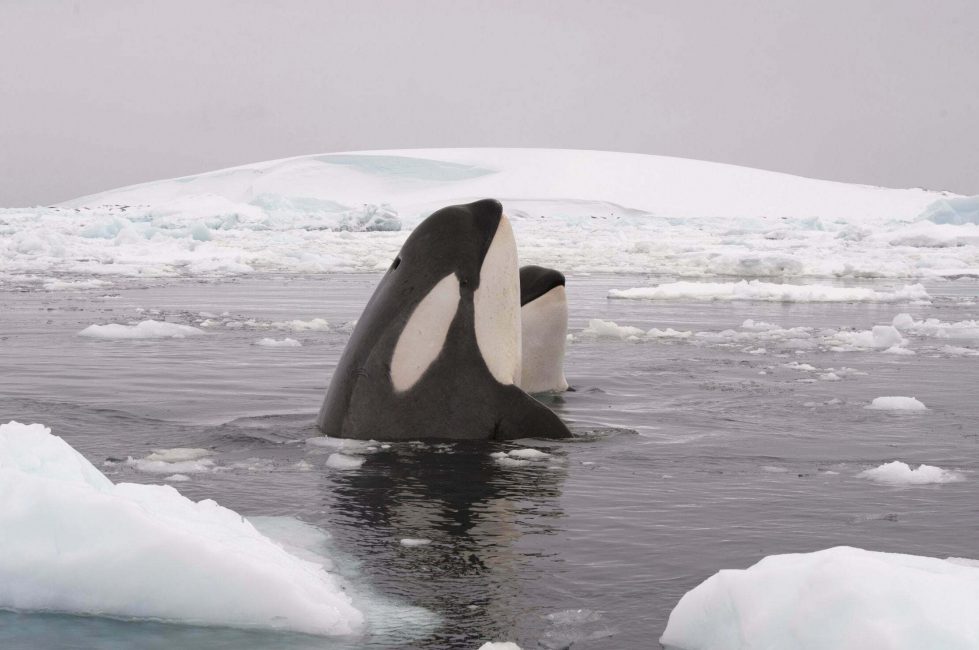
Southern elephant seals have few predators, but pups may be hunted by leopard seals, orca (killer whales), some large sharks and even sea lions. Adults remain vulnerable to attack by orca and some large sharks.
In the 1800s and early 1900s, humans hunted southern elephant seals to near-extinction for their blubber, which was rendered into oil used in paint, soap, candles and other industrial products. This continued until 1964, when populations had declined to the point that the industry was no longer economically viable.
Since then, southern elephant seal populations have rebounded well under the protection of the Convention for the Conservation of Antarctic Seals.

Life cycle
SOUTHERN ELEPHANT SEAL
Females (cows) reach sexual maturity at about 4-6 years of age, while males (bulls) generally begin breeding at around 10 years old.
At the start of the breeding season, males arrive at the beach about a month before females to claim their territory. When the females arrive, males attempt to attract as many as possible, to establish a harem. Large, dominant males may end up with a following of up to 150 breeding females.
Smaller, younger or less successful bulls tend to hover around the edges of a harem, hoping to sneak an opportunity to breed, or challenge for possession of the harem.
During breeding season, bulls may remain on the beach for up to three months without food, living off their blubber and defending their harem against interlopers. Bloody clashes can occur between males, resulting in severe, but rarely fatal injuries.

Life cycle
SOUTHERN ELEPHANT SEAL
Females come ashore to breed and pup between September and November. Pups are born within ten days of their return to shore, after a gestation period of 49-50 weeks.
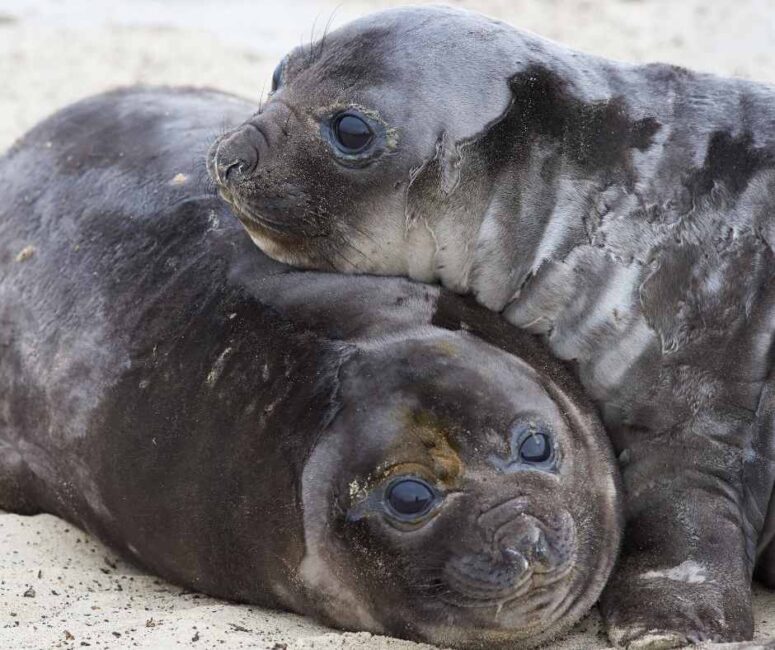
At birth the pups have nearly black fur and weigh around 100 pounds (45 kilograms). They feed on their mothers’ extremely fat-rich milk, tripling or even quadrupling in size to 260-485 pounds (120 – 220 kilograms) as their coat becomes lighter. They are weaned after about three weeks.
The mother usually mates 3-5 days before her pup is weaned, returning to the sea to feed after 23 days on the beach. Pups – now called weaners – remain on the beach for another 4-6 weeks before hunger drives them to forage at sea.
ANTARCTIC SEALS
Related reading
References:
Shirihai (2003). The Complete Guide to Antarctic Wildlife: Birds and Marine Mammals of the Antarctic Continent and the Southern Ocean.
Now that you’ve learned about southern elephant seals, read on to learn more about extraordinary Antarctica.
Antarctic Life
FEATURED LEARNING