ASOC
ASOC

Fast facts
Antarctic fur SEAL
Scientific name: Arctocephalus gazella.
Average Length: Female – 4.6 feet (1.4 meters); Male – 6.5 feet (2 meters).
Average Weight: Female – 74.9 pounds (34 kilograms); Male – 293 pounds (133 kilograms).
Diet: Krill, fish, and squid.
Average lifespan in the wild: Female – 25 years; Male – 15 years.
IUCN Red List status: Endangered (2026).
Range
ANTARCTIC FUR SEAL
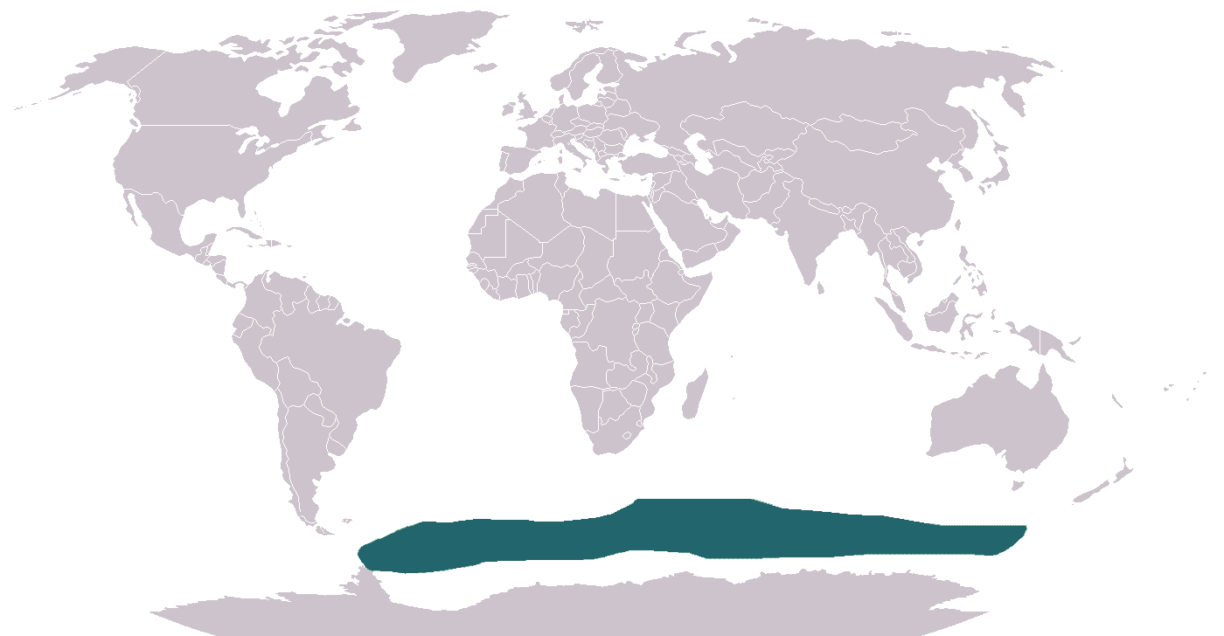
Despite their name, Antarctic fur seals are rarely found on the Antarctic continent itself. Instead, they breed almost entirely on subantarctic islands south of the Antarctic Convergence, with around 98% of the population concentrated on South Georgia in the Scotia Sea. Although they are seldom seen near the continent during the breeding season, Antarctic fur seals do appear around the Antarctic Peninsula in the later summer months, when they come to feed.
In 2026 the IUCN reported that the Antarctic fur seal population had decreased by more than 50 per cent since 1999, from an estimated 2,187,000 mature seals to 944,000 in 2025. Its status on the IUCN Red List was updated accordingly, from ‘Least Concern’ (2014) to ‘Endangered’ (2026).

Identification
ANTARCTIC FUR SEAL
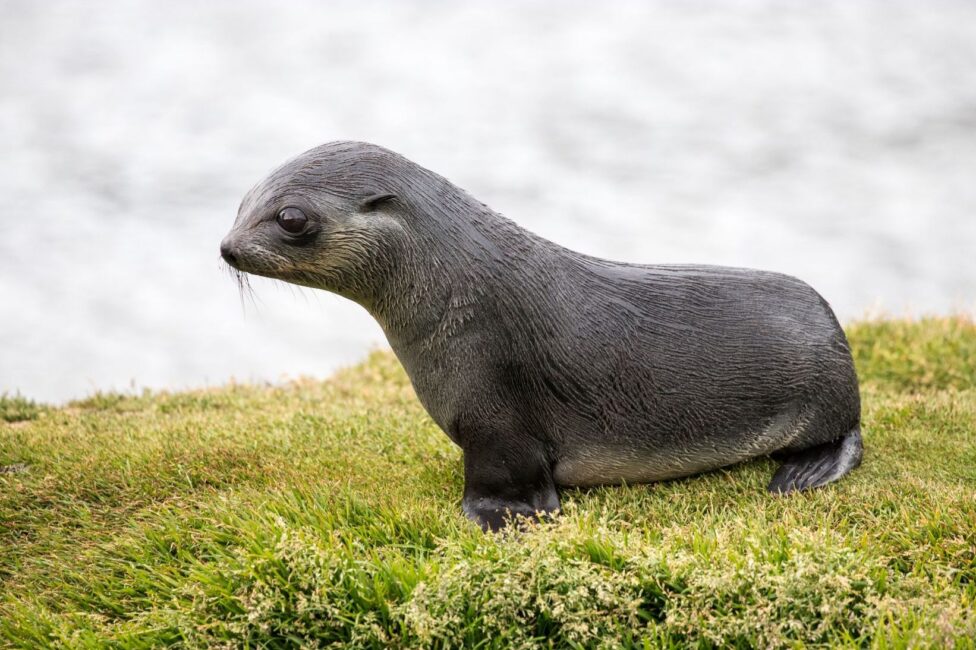
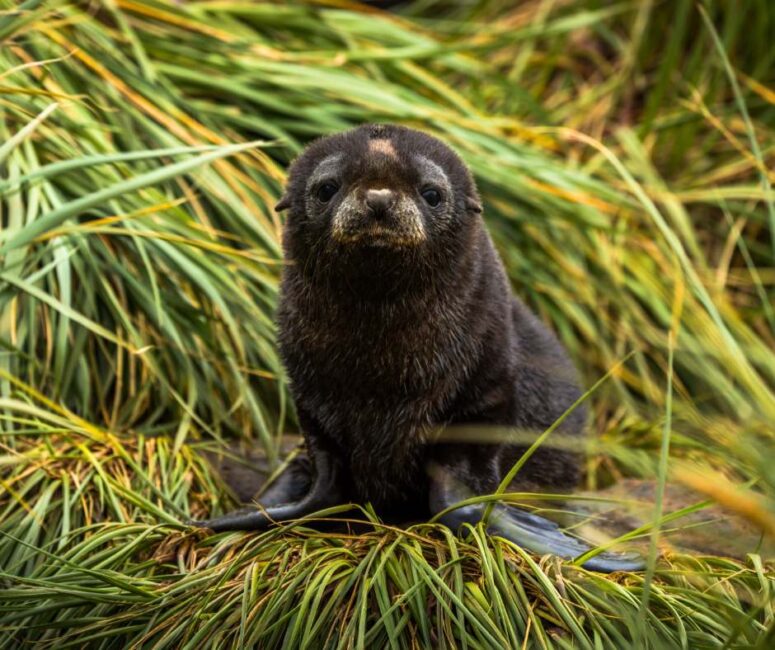
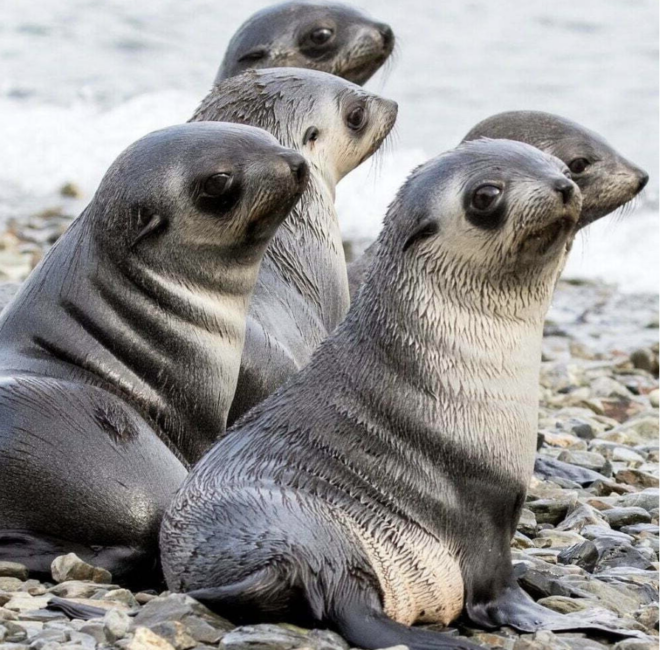
Fur seals are the smallest of the Antarctic seals. They have a slender, pointed muzzle, long external ears, and long vibrissae (whiskers). Adult males tend to be darker in color than females, which can be quite pale, even blonde or silvery-gray. Pups are very dark brown at birth.
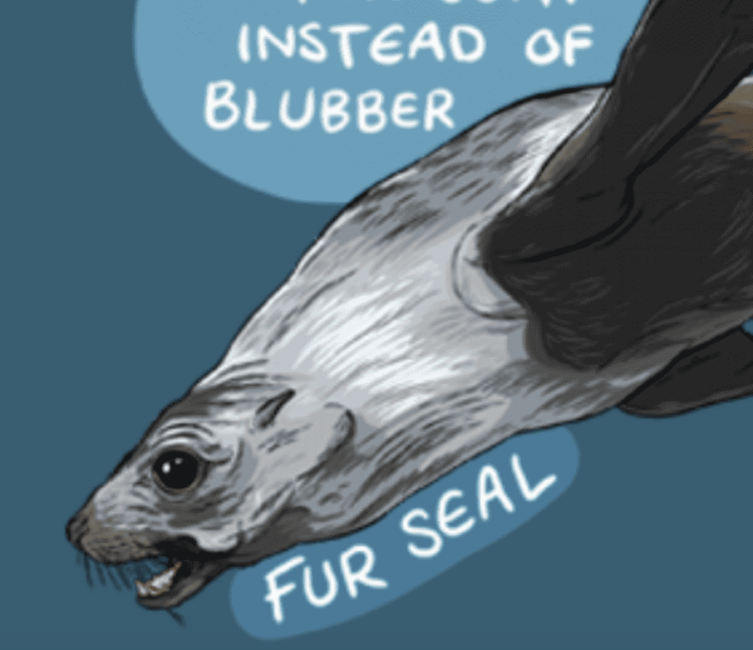
Unlike most other Antarctic seals, which rely on blubber for warmth, fur seals have thick, insulating fur to keep them warm. Their fur is made up of two parts: dense, water-resistant and insulating underfur – up to 300,000 hairs per square inch – and coarse guard hairs, which are longer and protect the underfur from water and abrasion.


Special characteristics
ANTARCTIC FUR SEAL
Leucism
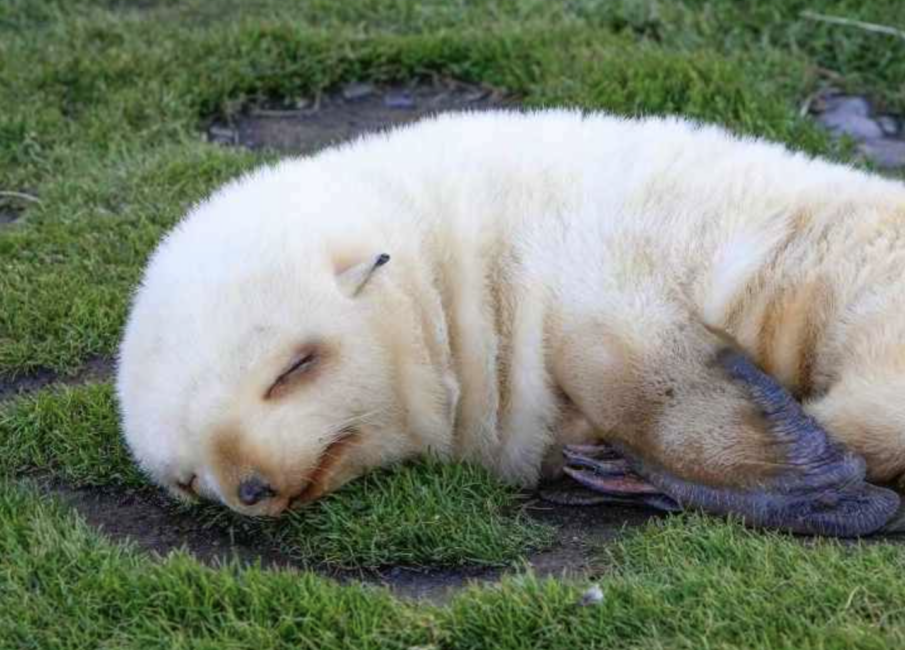
A small number of fur seals are born with a rare condition called leucism. Leucistic seals have white or blonde fur, which is caused by a genetic mutation that prevents melanin and other pigments from coloring the fur. This differs from albinism as the skin and eyes are not affected.
Mobility
Unlike true (earless) seals, Antarctic fur seals can prop themselves up on their strong front flippers and move around on all fours. They can travel up to 12.5 miles per hour (20 kilometers per hour) on land, and even faster in the water.
Sexual dimorphism
Antarctic fur seals have strong sexual dimorphism (size difference between males and females), with the average adult male weighing 293 pounds (133 kilograms), four times more than the average adult female, which weighs 74.9 pounds (34 kilograms).

Feeding
ANTARCTIC FUR SEAL
The Antarctic fur seal diet is quite diverse, and can vary depending on the season, year, and where they live.
The main food source for most seals south of the Atlantic ocean is Antarctic krill. Nursing mothers in South Georgia are highly dependent on krill during the breeding season. By contrast, Antarctic fur seals living south of the Indian Ocean tend to eat more squid and fish (primarily myctophids, icefish, and notothenioidei). Some adult males have been known to eat penguins.
Antarctic fur seals dive at night to feed, with the average female diving to a depth of around 100 feet (30 meters) and lasting around 4 minutes. The deepest known dive made by a female Antarctic fur seal was almost 600 feet deep (180 meters) and lasted around 10 minutes. Males, with their larger size, can dive deeper.
Life cycle
ANTARCTIC FUR SEAL
At the beginning of the breeding season in October or November, male Antarctic fur seals establish their territory on a section of beach. Dominant bulls fight to defend their patch against other males as they wait for females to arrive.
Females generally arrive between late November and early January. They give birth to a single pup several days later, after a gestation period of 8-9 months. They generally mate a week after giving birth.
Pups weigh 6-15 pounds (3-7 kilograms) at birth, and are suckled for 4 months, during which time their mothers forage close to shore. Males are not involved in caring for the pups.
Once they are weaned, pups spend several years feeding at sea, returning to land regularly for rest and later, once they have reached sexual maturity, during mating season.

Predators
ANTARCTIC FUR SEAL
Antarctic fur seals are hunted by sharks, killer whales, and leopard seals. At some breeding locations around the South Shetland Islands, leopard seals take as many as a third of all Antarctic fur seal pups.
Between the late 1700s and the early 1900s, humans hunted Antarctic fur seals to the brink of extinction. They were taken for their pelts, which were used in the linings of hats and coats.
In 1825, the British government introduced regulations to make the sealing industry more sustainable, and by the 1950s commercial fur sealing in the Southern Ocean had declined dramatically.
Today, Antarctic fur seals are protected by the Convention for the Conservation of Antarctic Seals.
ANTARCTIC SEALS
Related reading
References:
SCAR. (2006). Proposal to de-list Antarctic fur seals as Specially Protected Species. Working Paper 39. Antarctic Treaty Consultative Meeting XXIX, Edinburgh, UK, 12–23 June, 2006.
Forcada, J, et al.. (2023). Ninety years of change, from commercial extinction to recovery, range expansion and decline for Antarctic fur seals at South Georgia. Global Change Biology, 29, 6867–6887. https://doi.org/10.1111/gcb.16947
Shirihai (2003). The Complete Guide to Antarctic Wildlife: Birds and Marine Mammals of the Antarctic Continent and the Southern Ocean.
Scientific consultation: Mia Wege, Pūkenga | Lecturer, Gateway Antarctica, Te Kura Aronukurangi | School of Earth and Environment.
Now that you’ve learned about Antarctic fur seals, read on to learn more about extraordinary Antarctica.
Antarctic Life
FEATURED LEARNING