 ASOC
ASOC


Fast facts
CRABEATR SEAL
Scientific name: Lobodon carcinophagus.
Average Length: 7.5 feet (2.3 meters).
Average Weight: 440 – 660 pounds (200 – 300 kilograms).
Diet: Mostly Antarctic krill (Euphasia superba), – not crabs! Fish, squid, and other marine invertebrates make up a small part of their diet.
Average lifespan in the wild: 20-40 years.
IUCN Red List status: Least concern (2014).
Range
CRABEATR SEAL
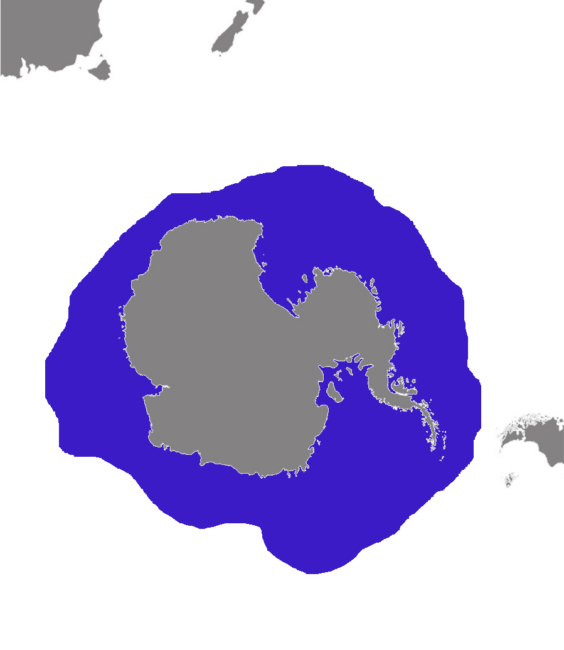
Crabeater seals are the most abundant seal species in the world. They have a circumpolar distribution, and are found right across the Southern Ocean.
They are ice-loving seals, which tend to migrate seasonally with the pack ice, although they have been spotted on rare occasions on coastlines as far north as South Africa, New Zealand, and even Brazil!
Identification
CRABEATR SEAL
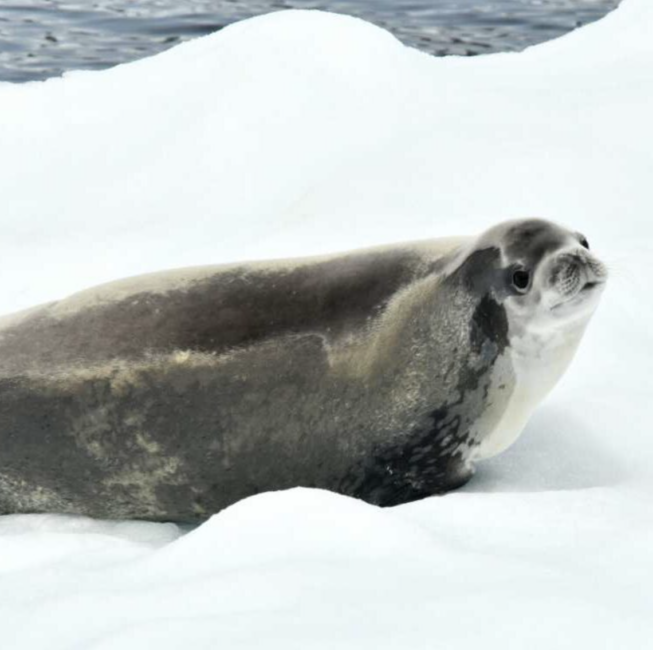
Crabeater seals are true seals, which can be identified by their long, dog-like snout and slender body, short flippers and the absence of an external ear.
Their short fur ranges from dark brown to almost-white, and can be slightly mottled, becoming lighter in the summer.
Most adult crabeater seals have several vertical markings or scars along their flanks, thought to be caused by leopard seal attacks in the years between weaning and reaching maturity.
While crabeaters may be seen alone or in small groups, they are quite social creatures. They have been observed traveling in groups of up to 500 individuals, and can haul out to rest and molt on sea ice in groups of up to 1000.

Feeding
CRABEATR SEAL
Contrary to what their name suggests, crabeater seals don’t eat crabs!* They eat mostly Antarctic krill, with a small amount of other crustaceans and marine invertebrates making up the rest of their diet.
Crabeater seals tend to feed at night, eating up to 44 pounds (20 kilograms) of krill per day. They typically dive for around 10 minutes to depths of between 30 and 100 feet (10 and 30 meters), although they are capable of diving much deeper, plunging down over a thousand feet and holding their breath for 20 to 30 minutes.
Crabeater seals are filter-feeders, much like baleen whales. They swim into swarms of krill with their mouths open, scooping up a soupy mix of krill and water. Then they close their mouths to strain the water out using their lobed (lobodontine) teeth like a sieve.
*Their name is thought to have come from the German word ‘krebs’, which refers to crabs, crayfish, and crustaceans in general.

Predators
CRABEATR SEAL
Crabeater seals are preyed upon by orca (killer whales) and leopard seals. Leopard seals in particular are responsible for a very high mortality rate amongst crabeater seal pups. It is thought that around 80% will not make it to their first birthday, primarily due to predation by leopard seals.
For those that make it past this hurdle, thicker blubber, tougher skin, and an abundance of new pups each year make them far more resistant to attack in future years.

Life cycle
CRABEATR SEAL
Crabeater seals breed on the ice in spring, from late September to December.
Females give birth to a single pup weighing around 44 pounds (20 kilograms). They nurse in a group or ‘triad’, a behaviour unique among Antarctic pack ice breeding seals.
Mum and pup nurse on the ice for 2-4 weeks, accompanied by a male, which may or may not be the father. The pup grows to around 242 pounds (110 kilograms) and develops its adult coat before being weaned in the first part of November.
Females mate again shortly after their pup is weaned, however their pregnancy may be paused for days or months by a process called delayed implantation. The fertilized egg remains in a state of suspended animation, and does not implant in the wall of the uterus. Hormone regulators stimulate implantation at the optimal time, giving the future pup the best chance of being born when food is abundant.
ANTARCTIC SEALS
Related reading
References:
Bengtson & Stewart. (2018). Encyclopedia of Marine Mammals (Third Edition).
Jefferson et al. (2015). Marine Mammals of the World: A Comprehensive Guide to Their Identification.
Shaughnessy (2006). Crabeater seals Lobodon carcinophagus during the breeding season: observations on five groups near Enderby Land, Antarctica.
Shirihai (2003). The Complete Guide to Antarctic Wildlife: Birds and Marine Mammals of the Antarctic Continent and the Southern Ocean.
Scientific consultation: Mia Wege, Pūkenga | Lecturer, Gateway Antarctica, Te Kura Aronukurangi | School of Earth and Environment.
Now that you’ve learned about Crabeater seals, read on to learn more about extraordinary Antarctica.
Antarctic Life
FEATURED LEARNING
